Observational research on how consistent daily schedules and routine stability correlate with overall energy consumption patterns.
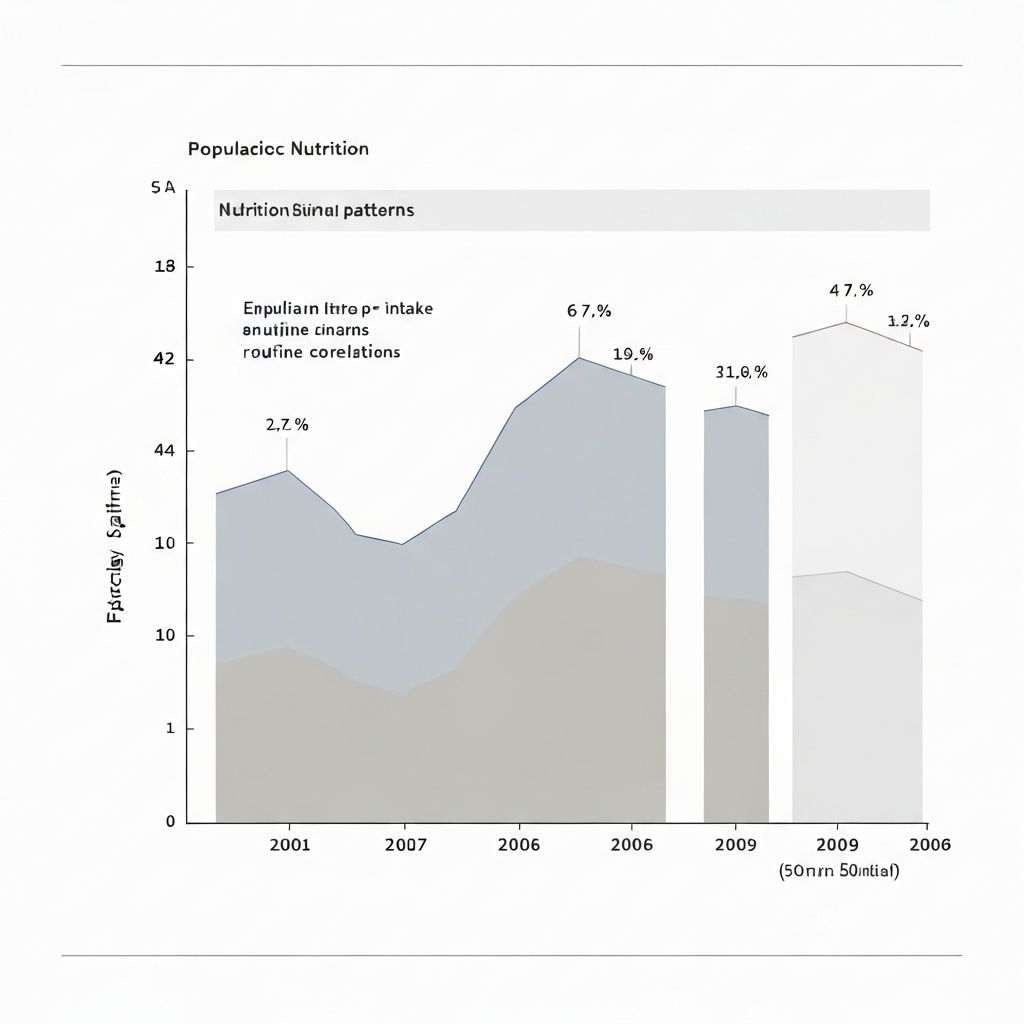
Observational research across populations reveals consistent patterns: individuals with structured daily routines tend to show more stable daily energy intake patterns compared to those with variable daily schedules. When meal times are consistent, preparation locations are familiar, and sequences are habitual, day-to-day variation in total energy consumption tends to be lower.
This pattern appears across diverse demographic groups and cultural contexts. The underlying mechanism likely involves automaticity: when eating-related decisions are automatic rather than deliberate, they tend to be more consistent. Deliberate choices, by nature, show greater variability than automatic routines.
Research on meal timing patterns shows that individuals with consistent meal schedules—regular breakfast times, standardized lunch timing, predictable dinner hours—display more stable daily energy intake. The regularity of temporal structure appears to support consistency of intake.
Conversely, individuals with highly variable meal timing show greater day-to-day variability in energy consumption. This suggests that temporal routine itself—independent of the specific foods consumed—contributes to overall intake stability.
Daily biological rhythms (circadian patterns) show some alignment with meal timing. When eating patterns align with circadian rhythms—consistent morning activation, daytime feeding, evening wind-down—metabolic patterns tend to show greater stability. When eating patterns are highly variable relative to circadian cycles, metabolic variability increases.
This suggests that routine structure interacts with biological timing systems to influence overall energy consumption patterns at the population level.
Population studies suggest that individuals who consume meals in consistent locations show more stable intake patterns compared to those eating across highly variable locations. Familiar eating environments appear to support more consistent automatic eating patterns.
This aligns with neuroscientific understanding: environmental consistency supports habit formation, and established habits show lower variability than novel or varied behaviours.
Research on shared meal routines shows that synchronized eating patterns—particularly in family or social settings—correlate with more stable individual intake. Shared routines create external structure that supports consistent personal patterns.
Individuals eating in isolation with variable timing show greater intake variability, while those with consistent social eating patterns show more stable individual consumption.
While group-level patterns show that routine correlates with stability, substantial individual variation remains. Some individuals with highly variable schedules show stable intake, while some with consistent routines show variable intake. Population-level patterns do not apply universally to every individual.
This individual variation reflects differences in habit formation, neural sensitivity to cues, genetic factors, and other individual characteristics.
Longitudinal observations consistently show that when individuals adopt more structured daily routines—particularly consistent meal timing and location stability—their day-to-day energy intake variation tends to decrease. When routine structure decreases (such as during vacations or schedule disruptions), intake variability typically increases temporarily.
These observations apply at population levels and do not predict individual outcomes. The relationship between routine structure and intake stability exists in aggregate but shows substantial individual variation.
Educational Note: This article presents observational research and population-level patterns for educational purposes. It describes correlational relationships, not causal mechanisms. Population patterns do not predict individual outcomes. Individual circumstances vary substantially. This is educational information only, not dietary or health guidance.
 TheHabitCircle